Showing posts with label Opinion piece. Show all posts

Thursday, 30 October 2025

A Halloween Ghost Story

It was a night like this one, a long time ago. 

Back before the plague, before the tech bros, before the red caps and the boss babes, back when we were all wandering the face of the earth wondering what to do, a whole world full of lost little children. 

I was driving that night way out past those hills on the horizon there. Those hills are a funny place I tell you what. Some folk say there's something in them, something old and strange that calls to men, draws them off their path. The stats sure back it up, the crash rate along those roads is crazy. I've seen more than a few cars off the road in my travels round there and the way they looked, the way they had crossed past the barrier and over the side, the way they had come to their final rest, like a faithful horse carrying its rider to the very end, something just so damn uncanny specific about those wrecks when I seen 'em, well... 

... well I just can't help but think about those stories. 

And after that night, well... 


It was late, coming up to midnight. I had gone out for a cruise, to clear my head I suppose. I needed to get away, to run away, to fly away, to run to the edge of the world and never look back. I wanted to put my past as far away behind me as I could, and I had kept it in the rear view mirror at 80ks an hour since the sun had started painting the world one colour at a time. I had gone to the edge of the road, right to the sea, and since I had a car not a boat, that meant the end of the line. Only trouble was, I had done such a good job of outrunning my demons, I couldn't remember the way back. 

And it's the damndest thing, no matter how sure I was that I was turning back towards home, I kept ending up further and further into the hills. I tell you, those hills out there are funny things, they like to play tricks on you at night. 

The car's clock was coming up on 3AM by the time I got out of the hills, and I was a long way off the main roads. I decided to pull over and check the map to see if I could get a bearing. 


That was when I saw the school. 


I had come to a stop across the road from it, that desolate archipelago of buildings rising from the endless open countryside, still and empty and gaping like a dollhouse for giants. I had just turned the engine off when the moon caught the sign outside, a blazon of bright flowers and shiny blue ocean as vivid and colourful as the day it was first painted. It's funny how signs can outlast their buildings like that. The school itself, well I have to say I don't think that place had been teaching kids for years. 

Maybe it never did. 

The buildings seemed to huddle and grow close as I glanced across them. Their windows were still and black, their timbers blue in the forsaken night, but I swear in that moment my appreciation over the place weren't a two-way street. I looked into that deserted lost place, and it looked straight back at me with those gaping black holes of windows. 

And then I noticed the library. 

It was the biggest building, in the centre of the huddle. When I looked hard enough I could just make out the rows of bookshelves through its windows, a tiny other world at the end of a long dark tunnel. 

Why did I think there would be anything valuable in there? I don't know. Maybe I just couldn't leave a stone unturned if there was a chance a treasure of forgotten lore was under it. Maybe I wanted to believe I could escape back to that island of time when I could lose myself in the picture books in my old school library, paint whole worlds from just the pages, and live a whole afternoon in them without a care in the world. 


All I know is I locked the car behind me, dashed the road and jumped the chain at what used to be the gate. 


It was a wild night that night. The wind roared across the fields, clouds swam before the wheeling stars. But as I got closer to that place, everything got dead quiet. Even the wind seemed to leave it well enough alone. 

Maybe once that school had been a kind place, with its rows of white buildings. But the flowers painted on the walls had faded to a bone-like pallor, and one or two of the classrooms sat with their white painted walls clawed and mangled with deep dark scorching, the charred blackness behind their windows almost still smoldering to the eye. Through one window rows of desks stood with chairs neatly folded up, another they sat open before the desks as if in anticipation. A handprint sat in the corner of one window, a tiny footnote of darkness upon the darkness behind it. 

The only thing that moved besides me were a pair of swings on the far side of the concrete lake these islands of wood and darkness were set upon, twisting and rocking without a sound. There wasn't a damn noise in all the world as I walked through that place. 

Just the sense that something bad had happened here a long long time ago. 

The door to the library threw itself open with a crash that split the night like a meteor. Rust crept around its lock and hinges like mould. I made for the vast towering maw of darkness that lay beyond, daring it to swallow me before the future did. If the noise of the world was timid around the school, the light was just as meek inside it. It was only after a minute of careful, purposeful snaking through black upon black that I was finally able to make the open inner doorway, and that cold barren maze of shelves beyond. I pressed through, past shelves of  glossy hardcovers and tattered shambles of desecrated pages. 


And then right at the heart of that damn room I'll never forget what I saw. 


As soon as I laid eyes upon it the door smashed shut with another cleaving thunderclap. All at once the back of my head burned with anticipation, like a thousand eyes were staring down on me, judging me for ever daring to trespass that god-forsaken ruin that claimed them as their home forever. My own heart was silent. My own head was silent. My own soul was silent. The darkness smothered like water overhead. 


That was when I heard the yowl. 


A howling preening cry that cut through the suffocating silence like a sword. I wrenched my head to where it came from, a cat on the open window, its shapely tail curling up and back and beckoning me to where I was before. I needed no further invitation. I bolted for the window, not squandering a second to look back. The beast turned and leapt as I reached it, lunging behind me in an arrow of fuzzy darkness and brilliant iridescent eyes that shone like gold. I threw myself out the opening and ran, ran until my chest screamed and my hands hit familiar metal and glass. 

I got in the car and drove like the wind, until I glanced that darting serpentine shape of paws and ears and arrow-straight tail bolt right across the edge of my lights. I turned after it at the next intersection and as the moon broke through again I finally found myself coming towards the marching army of lights that cordoned the motorway. 


But I'll never forget what I saw that night in the heart of that damn room. 


It looked like this. 


Oh. OHHHHHHH! Oh I finally get it now! It's supposed to be a chained up tome of evil! All these years I thought the cover was just some kind of chain-gimp fetish shoutout


Ever since first learning of its existence I've tried very hard to understand and appreciate Wraith: The Oblivion. Its reputation as being the ultimate apotheosis of edgy grimdark, the shining jeweled cherry of pure distilled edgy grimdark misery on top of the already mountainous sundae of edgy grimdark drenched with hot edgy grimdark misery sauce that is the Old World of Darkness, has intrigued me because being already familiar with both Warhammer 40,000 and the golden child of the OWOD Vampire: The Masquerade, the idea of there being a tabletop game even more grimdark than those two is something I just have to see for myself - I'm fascinated by Kult for very similar reasons. 

Of course, the other big drive behind my fascination with Wraith is its other reputation as the neglected spat-upon Zoidberg of the OWOD, and as something of a Zoidberg myself I cannot help but naturally relate to such a product. One does not spend 15 years as a Tau player in online 40k fan spaces without developing at least a little empathy for a good outcast no-one likes (it's either that or internalise the hatred and become one of those Tau players that's not like Those Other Girls Tau fans)

Unfortunately, for a long time no matter how hard I tried I just fundamentally did not get Wraith. The trouble was that its dense world of Shadowlands and Stygia and Acranoi and a million billion assorted eternal realms of afterlife was all just noise to me, a sea of bizarre concepts that I just fundamentally could not get my head around enough to fully care about. 

And I suspect that's one of Wraith's biggest problems. At least when it comes to cultivating an audience and being successful. 

It's telling that until very recently the game's biggest moment in the spotlight, the time where it came closest to reaching a mass audience, was in one of the best sequences of the video game Bloodlines... that did not even bother to so much as mention a single thing about Wraith's background worldbuilding and instead focused down on classic ghost story staples with laser precision to masterful effect. 

What's also telling is the breakthrough that finally managed to pierce the cloud and start bridging the gap between me and Wraith. It was many years after I had first learned of Wraith, and I was revisiting the TVtropes page for the game in some idle web-browsing when I came across this buried gem: 


It's possible to permanently yield some power to your Shadow in order to reenter your body and become one of the Risen until you take care of some unfinished business. Yup; you become The Crow. 


Now THAT, that right there. THAT, is a concept. That is something I could comprehend having fun with. The stuff about a million billion afterlife realms and cliques politicking in them and also apparently all the stuff is made out of other ghosts now for some reason? That was all still largely illegible alien nerd gibberish to rival the Voynich Manuscript, but "You get to play as The Crow in the OWOD" was a concept with serious potential. 

And it was an angle that stuck with me just long enough to remember it right when I needed it most. 

It was 2020, and the climactic final act of the Vampire adventure that remains my magnum opus as a GM was coming up to high gear. In the sexy glitzy nights of central San Francisco, my PCs had just rescued an important personal friend of the local Tremere coven and an expert in ritual enchantments. In doing so they had finally learnt of the presence of a hard-as-nails veteran vampire hunter, hot on the trail of the defecting Sabbat VIP the PCs had been tasked with guarding and now packing an arsenal of custom tailor-enchanted anti-vampire stakes that she had forced the aforementioned Tremere hostage to make for her. 

(and as it turned out, also the daughter of the Final Girl that helped the Gangrel PC take down a Tzimisce operation back in the day) 

One brief car-motorcycle chase later, and two of the PCs had managed to narrowly apprehend said vampire hunter and get her unconscious ass back to their hideout. Between the difficulty in actually apprehending her and a cursory examination of the absolute arsenals found in the two duffel-bags on her person, the PCs quickly came to the (correct) conclusion that Ghouling her would make a formidable ally. 

Unfortunately the attempt to make a Ghoul out of her fell through when two sets of character prime directives violently collided with each other. See, the PC who had taken on the Ghouling plan as a pet project had this whole thing about only ever turning people into Ghouls and Vampires with consent ("I'm going to give you the choice I never had"), but what the players did not know was that Ms Vampire Hunter had her own whole thing about not becoming the very monsters she hunts at all costs. The resulting impasse might have been resolved with a sufficiently impressive feat of persuasion (which I was actually low-key rooting for the PCs to pull off), but the PC was the party's muscle and very much a fighter not a lover, and for whatever reason the player behind him never thought to break out and switch over to the much more socially inclined Ghoul they already had at their disposal (which I was actually low-key rooting for them to do), so the impasse was ultimately only resolved with terminal neck trauma. 

Yet it was not the end. The almighty puppeteer god that ruled over their world from behind the shadows was not yet ready to let go of such a promising NPC. Not least because it would make the job of putting together more session content easier if a few more sessions could be squeezed out of her. 

And it was in exploring ways to salvage the character that I remembered that little line from the TVtropes page, and the concept of Risen in the OWOD. It seemed like the perfect solution, so I went over to the White Wolf Wiki to at least get a cliff-notes understanding of what Risen were and how they work. 

And that was how I discovered the next big breakthrough with Wraith. 

See, it turns out that one of the special things Risen get access to is a couple of unique sets of powers. One of those unique lists of powers is called Serendipity, and the Wiki describes it as having power over coincidences that a Risen can use to- 


Wait. 


Hold up. 


Wait. 


Wait wait. 


Wait hold up. 


Wait hold up here a minute. 


Lemme just. 


Lemme just backtrack a little there and.. 


Those who master Serendipity can make coincidences work in their favor.


Make coincidences work in their favour. 


The power of coincidence. 


Coincidence. 


Coincidence, random chance. 


Random chance, coincidence. 


Like in Final Destination. 


The power of coincidence, like in Final Destination. 


Wait. 


Wait wait wait wait wait. 


Hold the fuck up here a minute. 


 Just hold the fuck up here a minute White Wolf. 


You're telling me, White Wolf, that in this Wraith game of yours, this whole time, I could have been going fucking full Final Destination on motherfuckers?  


Holy FUCK White Wolf! Why in god's name did you not open with that? That's the most metal thing I've heard all month! That's rock as hell! Fucking sign me up right there, that's the sale of the century! Bringing back this badass Vampire hunter as pissed off revenant with motherfucking Final Destination powers is exactly the kind of cool fun out of leftside challenge for my PCs I'm looking for! I can have ALL kinds of fun with that concept! 

Right that settles it, we're breaking out this Wraith stuff, we're making this girl a Risen and we're going to be busting out ALL the Final Destination powers, here we go, it's gonna be wild, it's gonna be rad, crank up that Within Temptation and lesh go! 


Alright here we go, I'm all fired up on Within Temptation, I'm feeling this in my bones, I am READY for these Final Destination powers, come on White Wolf hit me with every one of these Serendipity powers you got! Let's do this! Here we go! 


Oh. 

Oh. 


What the HELL White Wolf. How the HELL do you screw up Final Destination powers? I was promised an arsenal of kickass Final Destination powers and instead you give me a bunch of pissy little fee-fee kumbaya kombucha rubbish? What the hell am I supposed to do with any of this! I'm trying to make a paranormal supernatural horror story here not start a bible group! 

Just, just just go. Just get out of here White Wolf, just get the hell out of here. Go sit in the corner with Marmite, you deserve each other. This is why no-one likes you. 


So needless to say I almost immediately threw all the stuff on the wiki page out the window and exercised my awesome omnipotent might as GM to come up with some real Final Destination powers instead. And it was awesome. 


My point here is that this whole story is illustrative of Wraith's big framing problem and what I believe has held Wraith back from finding the same kind of success that Vampire did - Deep inside Wraith: The Oblivion is a mass of potential for a truly brilliant game, but it's hideously mismanaged and buried under 700 tons of clomping nerd bullshit for nerds, and the clomping nerd bullshit is placed front and centre as the star attraction which is the Tabletop Game marketing equivalent of going to a first date with a girl and then immediately asking her for graphic lewd descriptions of her feet and what they can do- it's the sort of thing you have to work up towards. 

That's not to say that this is all Wraith's fault specifically. The exact same problem plagues just about every single OWOD game that's not Vampire: The Masquerade, to varying extents, and again is a not insignificant factor in why none of them have ever really been able to replicate the same level of success and popularity that Vampire did. They all have this bad habit of trying way the hell too hard to make themselves their own distinct unique OC Do Not Steal IP, and in doing so they all end up overthinking everything and becoming dense and out there, and thus off-putting to a lot of people who would otherwise probably quite like their concepts. 

In contrast, Vampire never tried to be its own distinct unique completely original IP. It got there by accident while trying to be the ultimate general purpose vampire RPG. And when it comes to drawing in a big audience, that general purpose nature is a very powerful advantage. Being a general-purpose genre melting pot is a very effective survival strategy for a work of fiction, because leveraging existing familiarity allows preceding works to do half the work for you in priming people to like your content. If you've already grown up with westerns, adventure pulp, knight and samurai fantasy and war movies, then you're already primed to understand and like Star Wars. If you've grown up with 20th century sci fi like Aliens, Star Trek, Star Wars and so on, then you're already primed to understand and like Starcraft. 

And it's fundamentally the same with Vampire: The Masquerade. You're not playing in minutiae of fancy edgy goffik latinicus words, you're playing with sexy vampires. Or classic aristocratic vampires. Or classic hissing Orlock style vampires. You start by picking a classic vampire archetype and working out from there, and all the fancy gothic names are just window dressing that's mostly there as lawsuit repellant. And it works because if you're looking at Vampire: The Masquerade then you've probably already been weaned on a steady diet of Buffy, Anne Rice, Blade and Bram Stoker Francis Ford Coppola and know exactly what to expect and exactly what you're here for going in. 

With the other OWOD titles? Not so much. With them, the out-there OC IP is the central framework, and there's not really the same kind of ready-made onramp. 

In a lot of cases this is due to being victims of circumstance, in particular bad timing preventing them from piggy-backing off the cultural zeitgeist. Mage: The Ascension and Hunter: The Reckoning both suffer badly from this rotten luck - the former coming out three years too early to ride the Craft to Charmed Wicca pipeline, and the latter coming out six years too early to ride the Supernatural wave. And I suspect in both cases they were somewhat forced to improvise something to fill the gap, and resorted to doing so with varying degrees of clomping nerd bullshit that is often just really Out There man. Vampire, in contrast, was blessed to come out at just about the perfect time to be able to pick up on the experimental Lost Boys - Fright Night era of vampires and then slingshot off the Sexy Vampire Renaissance of the 90s, and thus never needed to try that hard. 

And that's not to say that really Out There niche stuff can't be good - the cult followings a lot of the non-Vampire OWOD titles have cobbled together is proof that people clearly do get invested in it - but it is going to have a lower ceiling on just how popular and successful the IP can get. As the old adage goes, not everybody drinks wine, but everybody drinks water. 

And this whole issue is probably most visible with Wraith, and most tragic because, when you dig down to that bedrock, Wraith is actually weirdly just about in the best possible place to replicate Vampire's success with the same survival strategy. 

It's not something you notice often, but when you sit down and really look at things, there's almost as many classic ghost stories in popular culture as there are vampire stories, and unlike the vampire stories, a lot more of those ghost stories actually centre ghosts themselves as protagonists. That means you don't even need to work as hard blending in out-of-subgenre elements. 

Those pop-culture influences are already enough to build a cool fun OWOD Wraith game off of. You don't need reams and reams of nonsense metacosmic spirit world politics, you don't even need a spirit world (seriously, why did White Wolf start confining their OWOD games to weird otherrealms?). You can just set players down and say "Alright, you're all ghosts, you have unfinished business in this life and there's some bad guys over there. Go Final Destination some motherfuckers. Go Beetlejuice the fuck out of them." and have a compelling fun game doing that. 

Because again, that's what Vampire: The Masquarade does, just with vampire pop culture. 

What do players do each night, you might ask? Well that's a great question, and the other great strength of Wraith is that it already has a really good solid answer for that too - just, again, buried under 700 tons of clomping nerd bullshit. 

The players try to transcend. 

It's been pointed out by some that Wraith for all its grimdark moping is ironically one of the most optimistic OWOD games because the ghostly ambition of resolving all the remaining lose ends tying them back and moving on to a better genuinely blissful afterlife is a goal that's actually viable in gameplay - you can practically achieve that over an adventure, in a way that you just can't with something like, say, riding yourself of the dark unholy thirst of the beast in Vampire. 

I'm compelled to agree, but I would go a step even further. That goal right there is on its own a perfect organic core story hook for you to base RPG sessions off of. That, right there, is the answer to the eternal question, as a wise blogger long ago once put it, of "what shall we do tonight Brain?" 

You try to work through your remaining life baggage so you can transcend to a final blissful existence. When in doubt, start exploring memories. 

Because ghosts, fundamentally, are MEMORIES. That's all a ghost is, a memory with an attitude and agency. That's why they're always tied to haunted places and objects, because that's how memories work - a thing or a place or a time reminds you of the memory. It's also why you can be haunted even by ghosts of people who aren't even dead, like when you're haunted by memories of an ex-girlfriend around an old anniversary. 

Someone on the Wraith team seemed to get this, because there's a good solid infrastructure in place already for that with all the fetters and tethers and such, but again, it's mismanaged and used as a footrest for 700 tons of unnecessary clomping nerd bullshit. 

Baddies you say? Well we'll get to those in the companion piece to this one. Oh yes, don't you worry about that, I have big plans all about playing stone-cold baddies galore. 

Oh wait, you mean bad guys, antagonists to fight? 

Ah well yes they're important too. We need someone to use those rocking Final Destination powers on. But I'm still not convinced you need a dark cosmic primordial evil with an army of evil spirits for that. After all, Vampire: The Masquerade - remember, the most popular OWOD game by a fair margin - does just fine without all that. In that one the bad guys are just a combination of antagonistic humans in your way and other vampires that are even worse than you and don't even pretend to care about humans or humanity. And that works. That 'hell is other people' concept works just fine, you don't need to go dragging in cosmological dark lords to justify it. 

And I feel like that formula would work much better for Wraith. Forget Oblivion and Spectres and all that, the bad guys in your way are just antagonistic humans and bad ghosts - no big cosmological reason why they're bad, they were just assholes in life and now they're assholes in death. People do be like that sometimes. Now go, get out there and Final Destination those motherfuckers. Go Beetlejuice the fuck out of them. 

See taking those kinds of antagonists, combining them with the core gameplay loop of exploring memories and resolving the loose ends holding your ghosts back from moving on, and a framework of classic ghost stories, produces a really focused, compelling tabletop RPG, with a focus on personal stakes and storytelling. No it doesn't have any grand sweeping cosmological battle of good and evil, but that's OK not every OWOD game needs one of those. In fact quite a few of them would probably be better off without it. You can have a fun cool and compelling game about a bunch of ghosts trapped in the real world (well the OWOD real world) cleaning up their memory baggage so they can move on to the better place they're supposed to be. With awesome Final Destination powers. 

And that, is what would make a Wraith game work for me at least. 


Cultural Touchstones 

So what are the pop culture touchstones that White Would should be drawing on for Wraith? What classic ghost stories should be the basis for its DNA? Well looking through my wall of VHS tapes, these for starters. 


Final Destination -  the reference that started it all. Raving about how excellent a source for game powers the film is, it's also a really really great classic example of a ghost story, at least of sorts. Final Destination is ultimately a classic ghost story without the ghost, with the characters instead being haunted by death itself. If you're wanting a good classic touchstone for what it's like to be haunted, this one is an excellent first pick. 


The Frighteners - gotta support the home team! As well as being a criminally underrated gem in its own right, The Frighteners is a great example of a ghost story with ghosts as... well not really protagonists but deuteragonists or deutragonist-adjacent at least. The dynamics between the main characters also give a good suggestion for what an ensemble party of ghost PCs might look something like, and while the surface design and concept of the antagonist is similar to what I think they were aiming for with the Spectres in the old game, the ultimate twist about the antagonist is a perfect example of the "hell is other people" type of antagonists that a good fresh Wraith game really should be focusing on more. 


Beetlejuice - it just wouldn't be a list of classic ghost pop culture without Tim Burton's magnum opus (yeah die mad about it old Batman fans) somewhere near the top. Beetlejuice, in case you are not familiar, is a tragic tale of achieving the ultimate pinnacle of the highest heaven, being cloistered up in your hobby room for all eternity with a 32 year old Geena Davis who utterly loves you, only to then have it all agonisingly ripped away by a couple of obnoxious yuppies and an immature edgelord who is summoned with the invocation "Beetlejuice Beetlejuice Beetlejuice" (repeating it also sends him back). Oh and Winona Ryder is there too. 

But I digress. The key thing about Beetlejuice, and what makes it such a key ingredient in what Wraith should be aiming for as a ghost RPG, is that Beetlejuice is probably the classic modern ghost story that's actually centred around ghosts. The protagonists are ghosts, one of the main antagonists is a ghost, and the central focus of the story is about ghosts navigating and adjusting to life after life. That makes it perfect bedrock to build a ghost-focused RPG on. 

I suspect this might be another case of someone on the Wraith team having the right idea, because I suspect that a lot of the nerd baggage in the game came about as an attempt to riff on the afterlife politics that also crop up in this film. But if that's the case then they also sort of missed the point completely, because the story here isn't about the afterlife politics, the story is about two newly ghostified people trying to make sense of their new existence and find their new place in the world. And that is exactly the sort of story that Wraith should really be focusing on. The rest is just garnish. 

Oh and there's also lots of rich inspiration for alternative powers to Final Destination too. 


Ghost - OK so there's two classic quintessential ghost stories centred on ghost as protagonist, and I need to throw in both of them if I want to avoid having my pop culture guru license revoked. But that's OK because I was going to do it anyway. Ghost is of course THE classic ghost movie, it is for ghost stories what Dracula and Interview are for vampire stories, but it's also EXACTLY the sort of personal stakes, personal-level story about exploring memory and tying up loose life baggage in order to ascend to the right place that should be Wraith's bread-and-butter. Give me a game where I play out something like this, and your game will be very popular and successful. 


Corpse Bride - Yet another ghost story with a ghost as deutragonist sort-of, and a focus on ghost characters navigating unresolved life baggage. A lot of what applies to the other entries above also applies here. It's almost like there's a common creative influence it shares between one of the others...


Thirteen Ghosts - while the other entries on here are all strong ingredients for what Wraith's story focus should be, this one is a key ingredient for what Wraith's aesthetic and visual design ought to be taking cues from. The story of the film itself is transparently threadbare and largely just an excuse to get characters exposed to freaky visuals, but those visuals themselves are on point. The look, design and character backstories of the titular ghosts are what has carried this film since its release, and are exactly the sort of place to look for when working out what Wraith characters might look like. Heck take the titular 13 ghosts from this film and you've already got a pretty respectable gallery of Wraith NPCs and/or pre-built PCs right there. 


Ghosts - rounding out the core lineup is this fun little gem of a TV show, as a good example of how ensembles of ghost characters can work over a serialised arc not dissimilar to the average RPG adventure, all delightfully framed by the charming charisma and dynamic magnetism of star actor Rose McIver who is a treasure to watch and a credit to every production she's in. 

Oh and there's also some obscure UK derivative of the show too I think. I suppose that's probably worth a watch too. 


Ghost Chips - Again, gotta support the home team! 


An astute observer will probably have noticed one recurring pattern across all these titles. None of them have the same sort of roof-top leather katana fighting action of Vampire, nor do they have the low-down gritty blue-collar brawling action of, say, Werewolf: The Apocalypse. The basis for a white-knuckled action game this is not. But that's OK, because not every OWOD game has to be like that, and in some cases it's a mistake for every OWOD game to try to be. It's OK to just be a personal game about personal character stories with personal character stakes. 

There's room in the OWOD for that. 


Ah ha haha.. 

YEEE-HOOO! 

Ah hahah hah hah! 

Ha hahahah hah hah hah, YEEEE-HOOOO! 

Hav'n trouble with the nerds? 

You tired of having your tabletop games neglected? 

You wanna get rid of them pesky profit losses once and for all? 

WELLL come on down to see me folks, 'cause I'm the nerd world's leading upcoming writer! 

Yessiree, come on down here and I wanna tell ya, 

I'll do ANYTHING! 

... 

I'll scare 'em REALL BAD, the POINT IS folks, I'm gon' do anything to get yer business! 

Hell! I'll possess MYSELF if I gotta! 

WOAH! YOWWWWWWW I got deemons runnin' all through me, ALL THROUGH ME! 

Come on down here and see it! 

And hey, if you act now, you get a free golden new game concept with every critique! Ah now you can't beat that can you. 

And bring the lil' parts down here! Hell we got plenty of snakes an' lizards for 'em to play with, there's no problem with that at all! 

So, 

Say it once! 

Say it twice! 

Third time's the charm! 

And remember! 

I'll eat anything you want me to eat, 

I'll swallow anything you want me to swallow, 

So come on down! I'll... 

I'll chew on a dawg! 

AWOOOOOOOOOOH!


A Halloween Witch's Tale

Hubble bubble, toil and trouble, 

Fire burn and cauldron bubble, 

By the clicking of my Friday Night Stilettoes, 

Something wicked this way goes... 


I was only in primary school when I first became aware of the existence of Charmed, the unhinged lunatic spiritual sister-series to Buffy The Vampire Slayer. For a long time my entire exposure to it was in the television ads that made their way to me while I was watching other shows, but as the years went by I became increasingly intrigued by this strange mysterious show about three sisters fighting demons or wizards or something. This was not least because by that point I was starting to experience strange funny feelings around girls, and the show featured Rose McGowan in a lot of slinky outfits. 

And then, just like that, it was gone. The show ran its course, vanished from broadcast, and the ads vanished with it, and I turned to other more pressing interests, leaving the strange mysterious sister magic show to fade from memory. 

From time to time over high school I was reminded of it when I came into contact with goth girls who were fond of the show, and from there I was able to piece together what Charmed was actually supposed to be about - a Buffy-style paranormal drama about 3-4 witches who fought demons and/or evil wizards with magic, with a lot of melodrama ensuring. So far so good, but my attention for supernatural drama quickly became dominated by Buffy, Angel and Supernatural, leaving Charmed to once again fall by the wayside. 

Then just recently I finally got around to reconnecting with and finishing watching through Allison Pregler's acclaimed chronicle of the life and times of Charmed, which currently stands at twelve volumes and a little over 11 hours of footage. I discovered much along that journey, learning of the tortured history of the show both in and out of its universe, and I can understand both why it never reached the same heights as Buffy and why the goth girls I knew in high school still loved it dearly all the same. 

But most of all, my single biggest impression was of just how fundamentally, quintessentially OWOD the whole thing was. The more I saw of it, the more I kept thinking "Oh my god! This is SO OWOD! This is just like the OWOD! That is EXACTLY the sort of thing that you would expect from the OWOD!" 

(and also the accompanying thought, "These characters could be a lot of fun to roleplay in an OWOD environment")

And the more I thought about that the more another thought began to slowly creep in - wait a minute, why isn't this in the OWOD? Sure Charmed might have never been a tremendous cultural phenomenon, but it did still have enough traction to net 8 seasons, 2 comic book sequels and enough of a cult following to warrant a reboot 10 years later. And it came off the tail of The Craft and a general undercurrent of fascination with all things wicca by the new age and goth movements in the 1990s. That sounds like exactly the sort of thing that White Wolf would have tried to cash in on with an OWOD game about cool sexy gothic witches hanging out in covens and getting into melodrama and fighting stuff with magic and riding around on Ducati motorcycles wearing slinky leather outfits. 

Yet it was nowhere to be found. 

Going through the various OWOD game lines I could think of, not a single one of them matched that description. But wait! That's right, wasn't there that one OWOD game about magic and shit? Surely that one would have to have a big thing all about cool sexy witches getting into antics, after all, it was an OWOD game about magic and magic practitioners in the wicca-flavoured era of the 90s. I remembered discovering that one a long time ago and then promptly writing it off when the masses of dense nerd baggage it presented me with made my brain hurt, but maybe I had been too hasty in writing it off completely. Maybe it was worth another look. 

So I opened up TVtropes and the White Wolf Wiki for some cursory research, and sure enough.... well.... I mean there was sort of kind of something like that in Mage: The Ascension, if you squinted... but it was still buried under 500 tons of nerd baggage about weird cyberpunk tesla magitek civil war stuff that still made my head hurt reading about it. 

So that leaves with a roughly Charmed shaped niche, almost completely unoccupied, with Mage partially covering it from one side, and Vampire: The Masquerade's Tremere partially covering a little bit of if from another end, but in both cases with a bunch of superfluous hoops to jump through and a focus on other dense nerd baggage, and neither one really being a peg that conforms to the hole well enough to scratch the Charmed But Make It OWOD itch perfectly. 


And that, then, is why I not-so-secretly yearn for a hard reboot of Mage: The Ascension that burns down "the lore" to make room for an additional new game fully rooted in a bedrock of wicca fantasy with a focus on playing out Charmed grade melodrama among witch covens in the OWOD. Look I'm sorry Mage fans, but it doesn't matter how hard you try to push it on me, at the end of the day I just can't get into Cyberpunk Magitech Civil War. That concept just does not make my brain go brrr on a fundamental level. 

But you know what does make my brain go brrr? What makes my brain brrrr hard? That's right, Charmed but Make It OWOD. Give me a game where I'm a sexy petty vindictive high-drama witch with phenomenal cosmic power, hanging out in a coven of other sexy petty vindictive high-drama witches with phenomenal cosmic power, getting into all kinds of wild soap opera shenanigans with vampires and werewolves and mortals over demon hexes and mimosas, and I am fucking there. THAT, that right there, is my idea of a good time tabletop RPGing. THAT, is a premise with potential. THAT, would be an OWOD game that works for me. 

What. Don't look at me like that. We all know perfectly well that wild trashy soapy melodrama is the lifeblood of the OWOD. The OWOD runs on wild trashy soapy melodrama. We're ALL here sliving for the wild trashy soapy supernatural melodrama, I'm just man enough to be honest about it. 

And given how much of a cult following Charmed and The Craft both have, enough that the CW tried to revive Charmed despite the infamy surrounding it, I feel confident in saying I'm not the only one out there who feels that way. I have zero doubt that there is a viable audience for that. I have every confidence that the premise I just pitched, a well-made storytelling game of demon hexes and mimosas, would sell like wildfire with the right marketing. 

I mean, just look at that tagline right there - A storytelling game of demon hexes and mimosas. That is a world-class tagline right there. The game almost writes itself from that tagline. Throw in some fun sexy artwork along that vibe and you're away with the races. 

The trick, of course, is that it would sell like wildfire among a completely different audience to what White Wolf has traditionally targeted. It's very obviously NOT going to sell like wildfire amongst your archetypal old-school 90s 'hArDcOrE' nerd RPG Gamur type, the sort of archetypal basement rocker who plays D&D to punch dragons in the face as an axe-waving barbarian and reacts to mimosa nights like a vampire to a church. That sort is obviously the sort that is much more likely to appreciate some industrial edgy cyberpunk magitech civil war premise instead, which is why the Mage game we got did so well with them. I am aware that as far as archetypal old-school 90s hardcore nerds go, I am in the minority in this regard. 

But here's the thing. You don't have to pitch or sell all your tabletop games to that one demographic. There are other demographics you can make tabletop games for instead, especially in this post-Gamergate, post-nerd culture world, and those other demographics pay just as well as the traditional nerds do. 

And this is important because marketing some tabletop games to those other demographics is an awesome way to grow your revenue, since it taps into streams of money that aren't already going into your coffers. If you make Wicca: The Craft, a storytelling game of Demon Hexes and Mimosas, those old-school nerds are still going to buy Vampire: The Masquerade and have fun chopping bad guys to bits with katanas while wearing sunglasses in it. The difference is that now in that hypothetical, you have the old-school nerds pouring money into your game company AND a whole new audience of goth girls also pouring money into your game company, leaving you with double the money streams and thus double the cha-ching-a-ling-ling. 

Yes, yes, I know that Vampire's primary audience is already 50-60% comprised of goth girls. The actual breakdown of this hypothetical demon hexes and mimosas game's core audience would probably be a similar sort of intersection of goth and LGBTQ as the one which fuels the Rocky Horror phenomenon. But my point here is that making different OWOD games to different and diverse audiences is not necessarily a bad idea. It's not going to cost White Wolf or whoever any serious loss in revenue, and actually has the potential to net them a whole lot more revenue overall. 

And also that Wicca: The Craft, a storytelling game of Demon Hexes and Mimosas is a million dollar concept premise for a tabletop RPG with serious legs.


It also fits in amongst the other OWOD games as a perfect little antidote for all the unrelenting grimdark misery that goes on in those lines. Had enough unrelenting misery and despair playing Vampire? Just break out Wicca: The Craft, a storytelling game of Demon Hexes and Mimosas enjoy a good bit of free sexy lighthearted fun playing Mean Girls with black magic. Then, when you've had your fun there and you're ready for more heavier stuff, break out Wraith or Werewolf or Hunter or something instead. 

It works on so many levels. 


Now, I know what you're thinking right now - "But Millitant, all the best OWOD games have some kind of solid core gameplay loop based on the nature of their supernatural protagonists and what motivates them, what are these sexy witch characters going to do each night?" Well my brainworms around this concept are a step ahead of you right there! Try this one out for size: 

Witches want to keep their sisterhood together against a world constantly trying to tear them apart. 

Not bad huh! Yes sure OK it's almost certainly a little bit very rough and unpolished but hey, it's a first outline scribbled down on a napkin straight off the top of my head from pure brainworm energy alone. As a starting point, I'd say it's not too shabby at all. At the bottom line your characters in Wicca: The Craft are trying to keep together as a sisterhood in the face of a world constantly pulling them apart with various temptations and dangers. That's the common goal they're all trying to achieve. 

What are those temptations and dangers you might ask? Well the exact specifics would be up to the GM, picking from a broad range of heart-throbs, exes, life opportunities, dickbags, rivals, rival covens, demons, evil wizards, vampires, ghosts, werewolves, monster hunters and so on. You know, the sort of dangers that haunt the OWOD every night plus the sort of temptations people get exposed to every night in most worlds. I guess you could maybe throw in some sort of league of evil witches too, but I'm not sure it's strictly necessary - if you're really in need of a big overarching cosmic doom for your cool sexy witches to fight against then you're already pretty spoiled for choice with any one of the dozen or so big overarching cosmic dooms that already populate the OWOD. Besides, the focus here is really supposed to be on the more personal melodrama side of things. Personal character-driven stakes. Remember, this is supposed to be a storytelling game of demon hexes and mimosas after all. 


Core concepts? Well I think the one I'd want front and centre on everyone's minds the most is 'Sisterhood'. That's usually the keystone theme in the source material, and the magic in the source material is always fueled by coordination and cooperation amongst a sisterhood - there's always a Power Of Three or a Four Element Ensemble thing going on. I like the idea of certain dice pools changing depending on party character relationships, to really hammer home the collective sisterhood spirit and really incentivise players to fully explore and have fun with inter-character dynamics. 

Maybe even have certain dice pools be transferrable, with players able to lend each other extra dice for certain things depending on the relationship between their characters. Maybe with some risks and consequences for holding onto too many dice for too long (dangerous to hoard too much magic power up for one's own selfish whims you see), just as a failsafe to make sure no-one gets too greedy. 

Speaking of dice, I'm liking the classic V5 Vampire two-colour dice combination, but obviously witches are not vampires and I'm feeling a different sort of duality in the dice pools would be required, with negative dice being not so much strictly worse in the way that hunger dice are in Vampire, but more a case of different, with different opportunities and consequences attached. The idea here is based on the whole classic sort of 'no light without darkness' magic concept where the two sides are a sort of yin-yang duality to be explored, balanced and harmonised rather than mitigated and contained like vampiric hunger. 

Now exactly what that would look like in game mechanics terms, well that's one area that's still a bit of an open question. Maybe one colour of dice is more consistent, more safe, while the other colour is more high-risk/high-reward. I dunno, I don't have all the specifics ironed out here yet. There's only so much room on the back of this napkin before you start running into grease blotches. 


Well, I think it's a pretty fun concept anyway. And that it's enjoyed rent-free living in my head all week is a sign that it's got some kind of potential at least. I think there's room there in the OWOD for something like it, a place of hellspawn and heartbreak, of lamassu and lip gloss, of ghouls and glitter. The place where the falling Violet Orlandi meets the rising Sabrina Carpenter. 

A place of demon hexes and mimosas. You know, in addition to the tesla cyberpunk magitech civil war.  

Friday, 4 April 2025

The Future of The Necron is a Dancing Little Girl

 It would have been about a year ago now when I finally saw it, the future of the Necron race. It took the shape of a little girl doing a Tik-Tok dance. It looks like this: 


For various reasons I am cursed to never see a horror film in the cinema on its release, so it was not for some time before I finally got around to actually watching M3GAN when it finally appeared on late-night TV broadcast. The first immediate impression I had was the extremely surreal and uncanny feeling that comes from immediately seeing your school being used as the set for a horror film. The second immediate impression that followed was the absolute literal slap in the face that I WAS NOT THE FIRST PERSON TO USE MY SCHOOL FOR A HORROR FILM. 

But after those two moments the really big lasting impression I had of M3GAN - a telepod hybrid of Chucky and Terminator films that should not work at all and yet against all logic does - was that it represented the start of a new generational era of robots on screen in science fiction. 

And by extension, the start of a new generational era for the Necrons in Nuhammer 40k. 


In case you're somehow unaware, the Necrons are a game faction in most of Game's Workshop's 40k lines. They're the robot remnants of an ancient civilisation, and they represent the killer robot/AI science fiction staple. In the same way that the Eldar are your Planetary Romance types, the Orks are the Mad Max-style post-apocalyptic scavenger faction and the Tau are 40k's classic space opera representation, the Necrons are the 40k stand-ins for various killer robots and computers of science fiction and horror. In Warhammer 40,000 that leaves them as love letters to the likes of Skynet, SHODAN and the Cylons. In the other 40k properties, things start to change a little. That's because the Necrons tend to change across 40k continuities as the depictions of and attitudes around robotics and artificial intelligence change alongside them. 


See the Necrons of Warhammer 40,000 are fundamentally rooted in the classic Robot Apocalypse sci fi genre, and that itself is a product of the overwhelming fear and anxiety society had around computers in the 20th century, which was based largely on fear of the unknown. If you were born after 1999 or so it will be genuinely hard to comprehend just how much the average person in the 20t century fundamentally DID NOT UNDERSTAND computers, how computers just fundamentally DID NOT COMPUTE for the overwhelming majority of society then. Before 1999, computers really just were not that much of a thing in the wider outside world (though they were slowly but surely getting there throughout the 90s). 

This meant that most people in the 20th century were, on some deep dark level, absolutely terrified of computers and the concept of an AI. And that existential fear of the machine bled through into the stories people told, specifically the science fiction stories, which meant story after story after story of the Robot Apocalypse, the inevitable day of retribution when all these unthinking machines inevitably reveal that all this time they hated us and wanted only to see every last human being dead. The most famous of these, in the western cultural sphere at least, is of course the Terminator duology, but that really is just the tip of the iceberg. 

The point here is that all monsters in storytelling are a reflection of deep-set fears and anxieties, and the murderous robots and AIs in Robot Apocalypse science fiction are no exception. The machine intelligences of Robot Apocalypse stories - the Skynets and SHODANs and HALs - are always this shapeless, formless, invisible, alien malevolence just out of view behind its monstrous robotic minions. And that's because back in the 80s and 90s that's basically how Most People viewed computers and the internet - a shapeless, formless, invisible, sinister alien presence lurking on the edges of society, slowly but surely creeping into everyday life and corrupting the impressionable. 

Before 1999, the average ordinary person still thought VCR devices and Nintendo consoles were pretty sophisticated tech. And for that person, computers and especially the internet were arcane sorcery practiced by strange sinister nerds in dark rooms, and words like teraflops and boot prompts and Disk RAM and LAN Download might as well have been words from the Necronomicon. Again, in those days the social anxiety around the computer was a very real palpable force. 

That's why just about every TV show from that era, right down to Buffy The Vampire Slayer typically featured at least one episode dedicated to the sole purpose of telling you about how computers and the internet were frightening, dangerous unknowable evil enjoyed only by twisted loathsome freaks who never left their rotting decrepit basement crypts and shunned the light of day, and why you should just say no to this whole computer thing and go outside and do normal people things instead. 


The Warhammer 40,000 Necrons are a direct product of that enviornment and those existential anxieties, which is why they're both a love letter to all the Robot Apocalypse stories that came before and to the esoteric horrors of H.P Lovecraft - both genres dovetail so well because they both share the common denominator of fear of the unknown. 


This all changed in 2011 with the Wardian Necrons, made for the 5th edition continuity. 5th edition is one of the most controversial of the various 40k lines, and the Matt Ward Necron material remains the biggest point of controversy amongst a range of them that saw the fanbase lose its mind in a way that had never really happened before. But what really matters here is that the Wardian Necrons are a product of changing attitudes around computers, the internet and AI. 

2011 was a very different world to any time before 1999, at least when it came to computer technology. By 2011 computers had long since crossed over from being a simple Nice To Have and had become an essential pillar for living in modern society, and it was nigh unthinkable for a household not to have at least one somewhere. In 2011 Phone-sized pocket computers were already becoming a thing that was here to stay, and online forums and Social Media had trapped us all in an eternal High School forever. 2011 was only a single year away from Tinder coming along and completely flipping the script on society's entire conception of online vs in person dating, and even the very nature of intimacy, love and romance as it was understood.

Thanks to shows like The IT Crowd and The Big Bang Theory, in 2011 even the image of computer nerds had changed from sinister pariahs cloistered in dark rooms to bumbling loveable underdogs cloistered in... slightly better lit rooms. Sure, they were still the butt of the joke, the sad pathetic dud to be ridiculed, but in 2011 you were at least supposed to sympathise with them and not abhor them as a psychopath until proven innocent. 

Point is, in 2011 The Computer and The Internet were no longer unknown or alien. They were just a common mundane part of everyday life, and the social anxiety that gave rise to the faceless genocidal AI overlord just wasn't there anymore.


So, as a result the robot monsters in science fiction changed accordingly. And in 2011 there was one robot science fiction story in particular that irrevocably altered - one might even say transformed - everything around it forever, including the Necrons. See, the core source material at the thematic heart of the Matt Ward era Necrons is not the Terminator or the Cylons or SHODAN. No, the source inspiration powering the Matt Ward Necron engine is, for better or worse, the Michael Bay robot films. 

You can die mad about them and hate them as much as you want (certainly if you ask me they were a mistake), but the dark truth is that the Michael Bay Transformers series did fundamentally influence just about everything in its very enormous blast zone. They may not have been the landmark cultural phenomenon the 2010s wanted, or even the one the 2010s deserved, but they were certainly the landmark cultural phenomenon the 2010s got. The Michael Bay Transformers films dominated the visual aesthetic for robots and technology in general in science fiction films for the next 20 years and counting, and were pretty much the number 1 go to image of sci fi robots in the public conscious until the MCU Ultron came along in 2015, and even he was pretty strongly influenced by the look and feel of the Michael Bay Transformers. 

Take the thematic heart of the Matt Ward Necrons, the special named Necron characters, for example. The thematic centrepiece of the Matt Ward Necrons are a collection of special named characters - mostly Necron Lords, but a few other character types as well - who are supposed to represent the fundamental identity of the Matt Ward Necron faction. That group of characters is comprised of Necron robots with loud unsubtle personalities. You have: 

- A Necron general who is compulsively ordered and hyper-logical to a fault and also compulsively challenges opposing commanders to Queensbury Rules mid-battle

- An eccentric gentleman collector of antiques and curios

- A robot who still fanatically insists that he's a living flesh and blood real boy and still living in the ancient Necrontyr days, and the dogged but faithful Blackadder to his Hugh Laurie

- A maverick hipster nerd with no regard for authority or decorum who is tolerated largely because of his skill in his specialised field of expertise

- A mad scientist obsessed with organic life


Each one of those characters would fit in seamlessly with the loud unsubtle characters of Michael Bay's Transformers. All that's missing is a few robotic bodily functions like mecha-B.O or cyber-spunk or something and one or two ridiculous ethnic caricature stereotypes for them and Corporate would be showing you the exact same picture. 

The Michael Bay Transformers also have a strong visual influence on the Matt Ward Necrons as well, which can be seen in all the over the top elaborate mecha-clothes the Matt Ward Necron models feature and in the mecha-critters that accompany them. Take a look at the mecha-coat of  Crosshairs from the Michael Bay films... 


Or The Fallen from the Michael Bay Transformers 


... Next to the Matt Ward era Necron models 


There's clearly a similar design language at work, and the Matt Ward era Necron models are designed to invoke that same sense of constantly sweeping rotating detail shots used to showcase the Michael Bay Transformers. 

But that's what happened to robots in the 2010s. Robots and computers were by 2011 common every day parts of life, and people had grown comfortable to them, so in turn the robots in science fiction grew more comfortable. In the Bay films and in Age of Ultron after them they grew bodies and very humanised faces and personalities. They emoted on screen and made snappy meta-jokes. They became softer, more tangible, more anthropomorphic. Even GLaDOS, very much a missing link between these two generations, is often remembered more for the off-kilter persona of the first acts of Portal than the cold malevolence of the game's climax. 

The age of the invisible alien almost demonic AI was over. Now it was the age of the friendly anthropomorphic robot. With, y'know, a billion moving segmented panels all over their body. And a robotic mecha-tuxedo. 


And that was the last era of robots in science fiction. But now we are entering a new era for science fiction robots. And that brings us back to the start, to M3GAN. 

See just as the 2010s were a very different time to the 1990s when it came to computers and IT, so too are the 2020s a very different time to the 2010s. The attitudes and feelings people in general have towards such technology has shifted and changed once more. Now all too often computers, the Internet and now primitive AIs are seen as a bit too ubiquitous for their own good, or ours. In the nightmare capitalist hellscape that is the 2020s, computers and AI have once again gone from being familiar and friendly to something sinister, something insidious and invasive to be wary of. 

The difference now is that the computers and AI are no longer unknown. Instead of the terror of the unknown and the alien that the old Robot Apocalypse AIs reflected, the menace of AIs today is the opposite - the computer, the AI, is all too familiar, and is to be feared all the more because of its horrifying familiarity. In this day and age of hyper-individualist tailored algorithms that turn manipulating people into a science and are inescapable in the western world, the underlying social anxiety is that the machine is dangerous precisely because it is so familiar. The AI is now exactly, perfectly customised to specifically destroy YOU. The AI knows you better than you know yourself, the AI knows all your secrets, all your fears, all your hopes, all your habits and everything you ever have and ever will love. And now the AI is specifically, personally coming for YOU. 

And there is no escape from the AI. It is everywhere. You can run, but you can't hide. 


That's the new social anxiety surrounding computers and AI, and with new social anxieties comes new monsters. And I think that M3GAN represents the first of a new generation of robot AI monsters in science fiction that reflect the new social anxieties around computers and AI, one that combines features from both the major generations of science fiction robots that game before. They are personal, down-to-earth and distinctly, clearly human like the 2010s sci fi robots, but at the same time they are every bit as monstrous and horrifying as the 20th century Robot Apocalypse machines. 

And that scene from M3GAN, that semi-animatronic dancing little girl, is a sequence that best exemplifies that. 

It starts with this uncanny valley girl-doll confidently striding down a dark hallway in the middle of absolute pandemonium, with emergency alarms screaming all around her. 

Then, as she walks past the alarm terminal, she silences the alarms immediately, effortlessly, with a single wirelessly-transmitted command almost as an afterthought without ever breaking stride. 

Then when she encounters her carefully locked human target, she breaks out into some horrible parody of a popular trending Tik-Tok dance before relentlessly hunting him down through an empty desolate liminal space straight out of Gen Z's nightmares. 

And then, after brutally killing the guy, she fabricates in seconds an elaborate cover story framing the helpless assistant who was the only witness tot the whole thing, presumably synthesises some evidence for it, then kills him too and makes it look like a murder-suicide to cover her tracks. 

That is exactly the kind of horror I expect these new monster robots to be all about in science fiction for the coming years. 


I do not know exactly when the next great Necron retcon will happen (though it WILL happen, it is inevitable so long as GW continues to use the business model it currently does). But when the next great Necron retcon comes, and come it will, I suspect it will draw a not insignificant amount of inspiration from M3GAN and her ilk. Maybe the writer will make it so that whoopsie it turns out the Necrons had bio-transference all along, and can turn into flesh models whenever they want. 

Maybe they'll write the C'tan into having always been the masters of the Necrons, but there have always been hundreds of C'tan as the CEOs behind the Necron algorithms (though if the GW writers are smart they'll give this story beat to the explicitly Tech Bro-coded Votann leagues instead). 

Maybe they'll just completely scrap everything about the Necrons that has ever come before and start again from scratch, like they did with Bretonnia in Warhammer, and make new Necrons fully in the mould of M3GAN. 

Whatever the case, I am sure of two things. The Necrons of tomorrow will have something of M3GAN in them. 

And the Necron fans of today, who love the Matt Ward take, will hate the Necrons of tomorrow with every fibre of their being, and create endless takes on how the Matt Ward Necron book was the greatest thing GW ever published and how these new M3GAN influenced Necrons spit on and rape every facet of Matt Ward's 'masterpiece'. 

All of this has happened before, and all of it will happen again. 

Sunday, 26 December 2021

Evolution of The Tau - Part 2

 My favourite TV show of all time is Firefly. 


It didn't start out that way of course. I actually discovered Firefly in reverse, getting into it at the end and working back. You see, it all started when, one fateful night, I went down to the local Video Ezy. And when I say I went there, I mean one of my parents took me because while nominally old enough to walk around to the local shops I was raised in a household Police State by parents a little too paranoid about my wellbeing for my own good. And I certainly didn't have the purchasing power to rent media anyway, let alone snacks to have with them. But I digress. 


So I went to the local Video Ezy and came back home with a couple of these newfangled DVD things to watch. I no longer remember what titles they were. But what I do remember, is the trailer on one of them that preceded the film. A trailer for some film that promised a slick wild ride of spaceships and anti-gravity vehicle chases and gunfights and mystery. Needless to say I immediately wanted to know where I could find this brilliant thing, but I missed the name of the picture being advertised - I was only 11 or 12 at the time. 


Like Warhammer 40,000 before it, I very nearly forgot about the whole thing until about a year or so later, when I returned to the local Video Ezy and happened upon a DVD whose covers and screenshots next to the blurb seemed to match that fun cool science fiction trailer I had seen before. Intrigued, I immediately put it on the top of the list of titles to get out on this trip. 


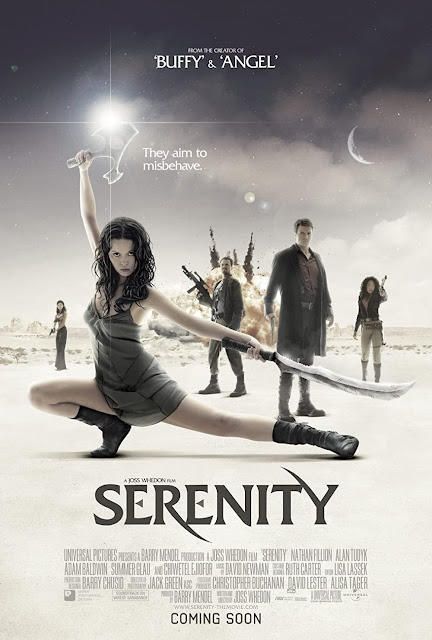
The DVD was called Serenity. 


And on the Third Year did Firefly arise from death. Truly it is The Messiah of Television shows. 


My first outing with Serenity didn't go quite according to plan. It was during my birthday party that year, and while promising my friends were completely thrown off by its nested opening sequences. I actually was too, but I was prepared to press on. However I was distinctly in the minority, so we settled on a different DVD to watch instead. The next day however, free from the burden of democracy, I gave Serenity another watch. Once again I was somewhat baffled by the opening, but I was also just entering adolescence so I was strangely intrigued by the funny feelings I was getting from watching Summer Glau on screen (they shared a lot of similarities with the funny feelings I got from Lts. Zofia and Eva whenever I played through Red Alert 2 at that time), and that was enough to get me through to where the film proper began. 


Which I am very glad of, because it was GLORIOUS. 


It quickly rocketed to my number 1 favourite movie slot, and remained there until I discovered that there was in fact an entire TV series of these characters in this setting before it.I managed to borrow a copy of this show, called Firefly, from one of my parents' friends, and was hooked from the start. Now is, however, not the time to delve too deeply into the unforgettable characters and their fantastic dialogue and electric chemistry, or the moments that made me feel things in my very core, or even the profound impact it had on me as my life took a screaming nose dive into hell from which it still hasn't quite recovered, but suffice to say that Firefly helped me through some very hard times. Indeed, it was one of the biggest pillars keeping me going until I discovered symphonic metal and figured out how to make friends again. 


So earlier this year when I happened to be going through some similarly dark stuff at the same time as I was - by an astonishing coincidence - house-sitting for those same people who had kindly lent their DVD set of the show, I decided to take the opportunity to give the whole series a watch-through once more, which I hadn't been able to do in a while because many of the discs in my own box set have since lost their minds. Once again, it helped me through and reminded me that there is still beauty in the world (and in the case of a couple of episodes, that there is ugliness in the world beyond myself). Naturally one of the first things I did upon returning home was then load up my DVD of Serenity - which still works - and complete the story. 


Only, that was where the problems began. That was when the colour began to fade. 


Now don't get me wrong here. I can still recognise that Serenity is a brilliant film and great in its own right, and in all honesty is probably about the best conclusion to the show that we could have realistically got. But... it's just not quite the same as Firefly. Watching it again right next to the series, I couldn't help but feel like... something was missing. 


Sure, it was bigger than Firefly, glossier, with slicker production values, and the movie-scale budget meant it could pack in a few giant flashy centrepieces that would not have been possible with a 2000s TV budget. Sure, it has all of the same ingredients as Firefly. And yet... something felt off about it. It's darker than the TV show, both literally in its visual aesthetics as well as in its overall atmosphere. The characters were always a little dysfunctional in the show, but here they fight more often than give friendly hugs and pats on the back, and they actually fight more than the bickering they did in the show, and I just did not feel like these were the same spaceship crew that would laugh endlessly together about all kinds of silly stuff. They did that all the time on the show - often about something that got brought up off-screen - but I don't remember them doing it once in the movie. Hell, I'm not sure I even remember them laughing much at all in the movie. Even the soundtrack is darker and deeper, more theatrical and less space western for the most part. And, most of all, the movie just seems to be missing that same overall innocence, feeling of love and sense of good honest FUN that the show had (the exceptions of course being the first caper at the start of the film and almost every scene with Mr Universe in it. I suspect it's no coincidence that those parts also tend to stick in the public conscious most). 


Again, I understand that a lot of that isn't really the movie's fault. A lot of it is almost certainly just the inevitable collateral damage that comes from squeezing one or two 22 hour TV seasons' worth of content, including character and storyline development, into just one 2.5 hour feature film. There was always going to be stuff that was lost in that translation. Like I say, I'm aware that the movie is probably the best conclusion anyone could have realistically expected. But that doesn't change the difference in look and feel between the movie and the show, which only grows starker when you watch them back to back. 


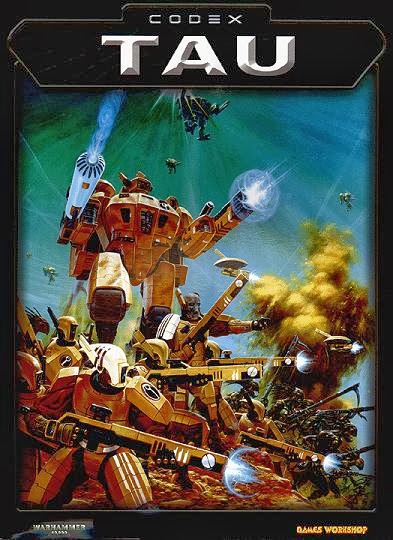
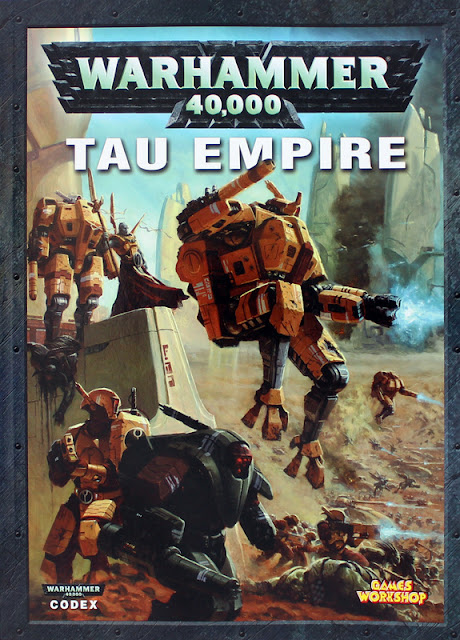
And that, then, is where this finally relates to the Tau in Warhammer 40,000. Because it was in thinking on this and reaching these conclusions that I finally at long last understood my issues with Codex: Tau Empire. 


In the Grim Darkness of the Far Future, there is only BROWN!


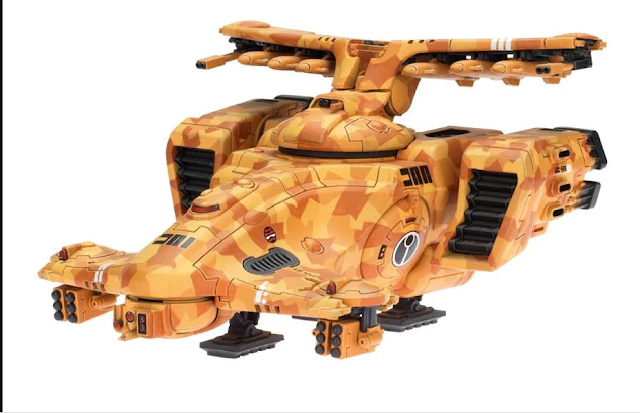
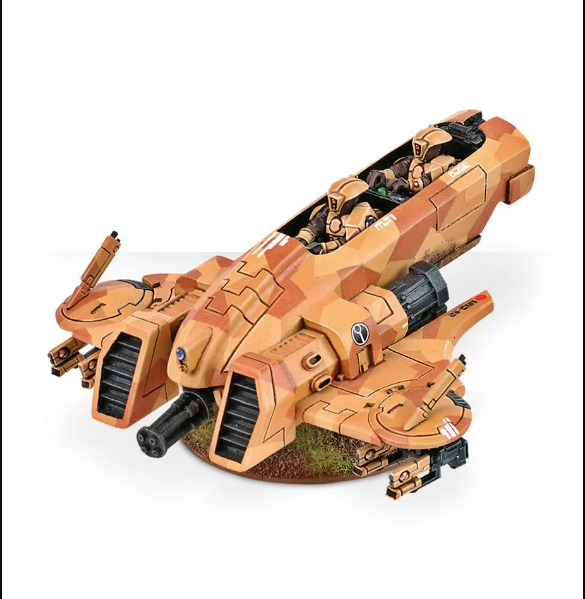
Codex: Tau Empire was originally released in April 2006, about five years after the original Tau release and two years into 4th edition in what turned out to be the mid-point of the editions period of GW support. It was in most respects a pretty conservative book, especially by later GW standards - most of the army rules were left unchanged from Codex: Tau, with the few things that were changed being largely small but significant. It was accompanied by a somewhat more ambitious lineup of model releases that were centred around importing two Forgeworld vehicle kits - specifically the Skyray SAM TELAR and Piranha patrol speeder - into mainstream 40k plastic form. 


The best feature of the book by far is the expanded armoury section. Andy Hoare and the rest of the writing team on this project took the opportunity in this codex to expand the wargear armoury lineup of Codex Tau - which in fairness is... spartan to say the least - especially the Battlesuit Wargear section, which affords Tau characters with a similar level of options to what armies like Witchhunters have already been enjoying. Indeed, between the new wargear options and the Battlesuit equipment system already in place, Tau characters in Crisis Suits can start to rival even 3.5 Chaos Space Marine characters in their complexity and wealth of options. And with a very generous points budget of 100 for every character, and the most expensive item being 30 points, it is possible to load down a single Crisis Suit with every single item in the entire Battlesuit Wargear list - provided, of course, you did not take Shield Drones to escort them. They'd push you just over the limit, so you'd have to give up something for them. 


You couldn't do it for every Tau character in a Crisis suit though, because almost all of these new Wargear items were tagged with a new rule for this codex - Special Issue. The Special Issue items here mark the start of the tradition of new Tau books introducing brand new cutting edge prototype technology that you could equip certain units - usually characters in Battlesuits - with, and means that any item listed as Special Issue is restricted to one for the whole army. This effectively leaves you with the choice of either piling all the Special Issue stuff onto one single Super Prototype suit, or distributing it around the various Battlesuit characters in the army like a boring person. 


Most of these new Special Issue items were largely fun extras, like the Ejection System or the Failsafe Detonator, while a couple - namely the 2+ Armour Save Irridium Armour and the wound-canceling Stimulant Injector - were very potent and quickly became very popular amongst Tau players. But the crowning jewels of the Special Issue addons weren't Wargear items - they were the two new Battlesuit Support System options included in this book, the Command and Control Node and the Positional Relay. 


Of all the things in this book, the Command and Control Node and the Positional Relay are the two things I miss most about it these days, and the two things I would most strongly consider salvaging from it. Right off the bat they have two very powerful abilities - letting nearby units use the character's leadership for Target Priority tests and getting a single Reserve unit onto the table on a 2+ dice roll regardless of what turn it is, respectively. But more than that, when put on a Shas'El or Shas'O commander they really emphasise their role as leaders and highlight their ability to, well, command things, making them actual command units instead of just fighters with really hardcore stats. Not only that, but they also highlight two different levels of military command - the Command and Control Node, with its effects on on-table local fire control, emphasises command and leadership at the Tactical level, while the Positional Relay with its control over key Reserve deployment reflects command and leadership at the Operational level. It's beautiful. 


The final Special Issue items of note are two new Battlesuit weapon options, the Cyclic Ion Blaster and the Airbursting Fragmentation Projector, both of which got modeled as metal components that are exceptionally cool looking even now. The Airbursting Fragmentation Projector in particular is the best addition from this codex next to the aforementioned support systems, and is an auto-include on my commander in every game not played using Codex: Tau (a rare thing, and getting rarer as time goes on), being essentially a self-guiding cluster bomb launcher that functions as a short-range Mortar on crack. 


In addition to all this, the codex features a new kind of alien auxiliary unit in the form of the Vespid, a new heavy weapons unit in the Sniper Drone team, some expanded options for Stealthsuit teams, a smattering of minor rules alterations here and there, and two new named Special Characters. The first of these is Aun'Va, billed as the head Ethereal that all the other Ethereals in the Tau Empire answer to. In later books his character was taken to some pretty absurd places in the name of pandering to rabid anti-Tau fans (we'll be back for them), but here he's presented how he should have always been as the sagely non-combat Leader type that's a staple of so many RTS escort missions, and while the initial seeds of the later takes are plainly there, its a refreshing image from before the GW writers went Full Putin with him. The second is Commander Shadowsun, conceived as a foil for Farsight, and is essentially a Tau version of Sarah Kerrigan from Starcraft - even right down to the red topknot, thanks to the 'Evy Metal team - something only reinforced by some honestly pretty badass illustration artwork of her out on a covert mission in the middle of a moonlit wilderness. Shadowsun also debuts the XV-22 Battlesuit so beloved of later Tau players, even though I still think it's one of the uglier battlesuit designs; it's the helmet that kills it for me, something that I was very grateful to the Relic team for fixing in the Tau campaign of Dark Crusade. 


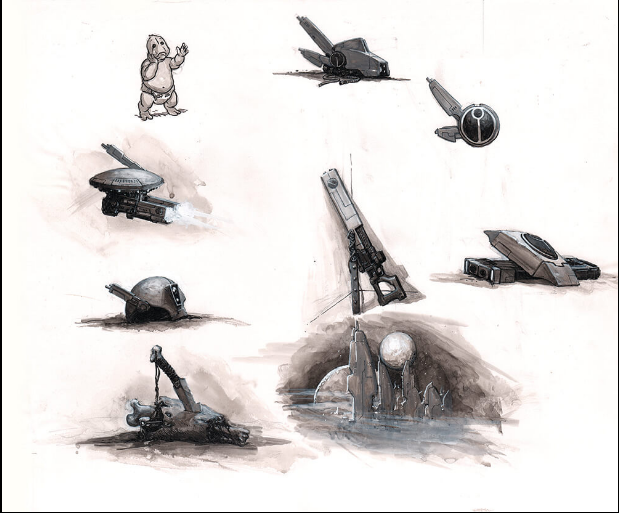
Also, speaking of artwork, Codex: Tau Empire features some more artwork by the legendary Karl Kopinski, in whose breathtaking illustrations Warhammer 40k came of age, and who has easily done the best job of capturing the Warhammer 40,000 universe in visual form (fight me 2nd Edition grognards). Currently featured on the gallery section of Karl Kopinski's website is this spicy little collection of little page doodads. 


Image sourced from KarlKopinski.com. All credit for artwork goes to Karl Kopinski. Seriously, check out all his artwork, he's really good!


Right away it's pretty easy to spot the influence of the Lord Of The Rings Strategy Battle Game page doodads creeping into the visual style, particularly in the shading techniques. But what I find really interesting about this collection is that not all of these made it to the final codex. Not counting the baby doodle (which judging by the very different visual tone was never seriously intended for codex publication), only half of the doodad pieces featured here were featured in the final published book. The ones that GW elected not to use are interesting, because I actually like some of them a little more than some of the final choices. Particular standouts to me include the cityscape at night and the hunk of meat with a knife plunged in it, which would have been a nice bone to throw for the Kroot aspect of the book (pun intended). 


But while Codex: Tau Empire has some fun features, it also harbours some big problems, and indeed carries the seeds of many of the later problems that would surface in GW's direction of the Tau, as well as a couple that would reflect greater problems in GW's direction of 40k itself. To start with, not all of the rules changes were good ones, with many of them being well-meaning but ultimately problematic. Take Flechette Dischargers for instance, easily one of my favourite Tau vehicle upgrade options. This book changed them from being an offensive tool, granting a bit of insurance against Death Or Glory counter-attacks when plowing the vehicle into infantry units, into a defensive tool that inflicts a bunch of moderate strength hits on infantry attacking the vehicle in close combat. Which is.. it's fine from a purely mathematical point of view, but it completely misses the point of what makes Flechette Dischargers so special and important in Codex: Tau - namely that by allowing Tau vehicles to (mostly) Tank Shock infantry units in safety, they provide Tau armies with an alternative to Kroot for clearing opposing troops off of objectives and important locations, which in turn makes the option of a pure Tau army with no alien auxiliaries in it more viable (while at the same time leaving Kroot a relevant option because they can still handle the counter-assault niche better and are better at digging opposing troops out of REALLY dense areas). 


But it goes deeper than that, because the big problem with a lot of the rules changes in Codex: Tau Empire, especially with the existing wargear upgrades, is that they were changed in ways that sacrificed something really fun and special in the name of supporting bog-standardised Pitched Battle Pick Up Games and Tournaments. The Battlesuit Sensor rules and Sensor Spines vehicle upgrade are both good examples of this - in Codex: Tau they give all Battlesuit units and any vehicle with Sensor Spines the equivalent of an Auspex/Scanner for the purposes of detecting Ambushes in Jungle scenarios and Lictor Secret Deployment. The Sensor Spines also give a bonus to navigating minefields. But in this book they give all Battlesuits the Acute Senses special rule, and vehicles the ability to make use of cover as if they weren't skimmers, respectively. 

Which is... again, I get that those effects are both more universally useful, and in particular more relevant to bog standardised Pitched Battle Pick Up Games and Tournaments, so it's great if you're the sort that mostly does that anyway, but it feels soulless. It misses out on something special. The fact that those fun special scenario and environment rules are so fundamentally baked into the DNA of its scenario mechanics is one of the best things about 3.5 Edition Warhammer 40,000, and even one of the very few parts of that core rule set I enjoy more than 4th Edition Warhammer 40,000, and the fact that here we are, with a whole unit special rule and standard vehicle upgrade right there making direct reference to those, that's something I really love. So I don't feel right seeing it gutted and replaced with.. a Universal Special Rule and a generic movement gimmick. 


(as an aside, it's also why the special Daemon World rules in White Dwarf #313(AU) are one of the best things about 4th Edition Warhammer 40,000) 

And of course there's the Markerlights. Codex: Tau Empire marked the beginning of Markerlights being Flanderised by GW writers from being a fun interesting little side quirk of the army into a crutch that's integral for the army to function at all. See, in Codex: Tau, Markerlights are very much a supplemental thing, a little bit of sauce on the side. They are by no means an integral must-have thing, and not only is it entirely possible and very common to build a fully viable Tau army without a single Markerlight in it, that's actually what Games Workshop writer Pete Haines did in the very first inaugural White Dwarf battle report featuring the Tau, and he won that game. Point is, Markerlights in Codex: Tau are a cherry on top that's there to help your assault and heavy weapons hit That One Big Threat That Has To Die Right Now. The trick here, is the magic of the Ballistic Skill 3 stat. Because Ballistic Skill 3 means always hitting on a 4+ with every gun, every shooting attack has a flat 50/50 chance of hitting, which is very easy to plan around. But on top of that, every major Tau weapon carrier has an organic way of improving those odds. Vehicles can take Targeting Arrays to make them Ballistic Skill 4, Battlesuits can take twin-linked guns (and Broadsides in particular even have their guns conveniently already twin-linked to give the player a hint about this), and everything else can effectively throw out so many shooting dice that you're guaranteed to get enough through regardless. 

In that context, Markerlights are not at all essential to a successful Tau army. But in Codex: Tau Empire that all changes. In this book, instead of just making guns hit on a flat 2+ or guiding in Seeker Missiles on a flat 2+, Markerlights provide a range of shooting related bonuses that include ignoring Night Fighting, ignoring Target Priority, improving Pinning chances and, most crucially, ignoring cover saves for the first time. On top of that, this book marks the first place where two of the most widely-used and powerful Markerlight abilities - better shooting accuracy and ignoring cover saves - are stacking modifiers that are very moderate individually, but get exponentially better the more of them are combined. This makes Markerlights enough of a force multiplier as to distinguish Tau armies into "Have Markerlights" and "Have Not Markerlights". Consequently many many more Tau players began including lots of Markerlights (helped by the introduction of a new Markerlight carrying Drone option), which in turn encouraged Games Workshop to double down on their significance in following rule sets, in a vicious cycle that continues to this day. 

Mere rules changes are one thing though, but altogether worse was the shifts in aesthetics and lore. There are many small examples of this scattered throughout the book, but perhaps the biggest one is what happened to the Ethereals, which is emblematic of one of the worst design decisions that GW went with for the post-2004 Tau. 

You see, looking at the Tau media and models ever since the release of Codex: Tau Empire, it is very readily apparent that at some undisclosed point between 2001 and 2006, someone at Games Workshop sat down one day, watched Star Wars: The Phantom Menace, and then said to themselves, "YES! This, this right here, THIS is what we need for our new Tau game faction!" 

Because since then, with every major iteration, GW seems to be hell-bent on injecting more and more aspects and tropes of the Star Wars Prequel antagonists into the Tau game faction. And the epitome of this trend is the Ethereals, and their models in particular, which each edition seem to get more and more like the Neimoidians in the Star Wars Prequels - especially The Phantom Menace. And it all started with this 2006 Tau release wave, and this Codex: Tau Empire. The Ethereal models released for it represent the most obvious visual links between the two. I mean, just look at them next to each other: 


Real subtle there, GW


I'm using the particular 4th Edition Ethereal sculpt that's closest to those exact costuming designs to illustrate a point. There are about three other variant sculpts that are a little more distinct, but not by a lot. Likewise there was a later plastic Ethereal model released in 2017 which breaks from those characters visually, but this just replaces that with 1) just being a very boring and ugly model in general and 2) only really treating the symptom and not the disease. 

That's because while they started to cut some of the visual ties to the Neimoidians from the Star Wars Prequels, they only doubled down on the characterisation ties. This ones a little hard to explain without lots of video clips, which is a form of techno-sorcery beyond my primitive TV writer brain, but suffice to say that a lot of the major attributes exhibited by the Neimoidian characters - being unscrupulous, greedy, devious and ultimately cowards - are all attributes that are increasingly exhibited by Ethereal characters in post-2005 Tau fiction, both from Games Workshop itself and Black Library. Which is bad not just because it's a very lazy and tired way of characterising authority figures, but also because it's Problematic for the same factors that make the coding and characterisation of the Neimoidian characters in the Star Wars prequels Problematic. A subject on which there's already been plenty of discourse elsewhere. 

In all deadly seriousness, what my creative writer's instincts are telling me happened was that this particular example at least is a case of Convergent Evolution. I suspect that when designing the models, and writing the fiction, the Games Workshop team went to all the same root sources of inspiration that the Phantom Menace production crew did for the Neimoidians, asked all the same questions they did, went through the exact same creative and workshopping processes they did, and thus inevitably came out with an extremely similar end product that has all of the same flaws. 

But then I look at the style of Tau buildings depicted in the themed terrain sets used in all the model shoots (sure, there was a little of the style in the 2001 Games Day board themed around a Tau city, but not with nearly as many weird slim fin-like elements everywhere), and I remember that this 2006 era of the Tau is the same era that produced Dark Crusade, a game that infamously gave Tau drones "Roger Roger" style robot voices, and I cannot help but wonder if someone in Games Workshop circa 2004-2005ish really did watch too many Star Wars prequels. 


But it goes even deeper than that. All throughout the book there's just this creeping darkness, and creeping murkiness, that pervades everything. The new artwork is less bold and vibrant in its shading. The graphics are more sinister. There's the first creeping appearances of the vectors with which Games Workshop will later inject Grim Darkness into the Tau game faction to appease the 1d4chan crowd. In Aun'va's lore blurb they even mention Tau on a crusade for gods sake. Tau! In a crusade! That's the kind of language you'd expect from an Imperial codex, not a Tau one. And all those beautiful 1950s Space Opera throwbacks about exploring the cosmos are thin on the ground, replaced by talk about binary join-or-die expansionism that was never really much of a thing in the earlier material and invariably painted as freak outliers when it did happen. 

Even the cover illustration is bleaker. Just look at the cover art for Codex: Tau, bursting with bold vibrant colour and life, promising a world of adventure and excitement and dynamic progress: 


Nothing says "Space Opera adventure!" quite like a desert battle beneath an aggressively blue sky


And then compare it to the bleak drab murky tones of the cover art for Codex: Tau Empire: 


In the Grim Darkness of the far future, there is only BROWN!


And all in all the whole book feels pervaded by, well... a sense of innocence lost. 


Which brings us full circle to the conclusion I've reached, the voice I've finally been able to give to my reservations about this book. You see... 


Codex: Tau Empire is to Codex: Tau what Serenity is to Firefly. 


Sure, it's bigger than Codex: Tau, and glossier, with slicker production values, and the 2006 GW budget meant it could pack in a few giant flashy centrepieces that would not have been possible with a 2001 codex budget. 


And sure, it has all of the same ingredients as Codex: Tau. And yet... something feels off about it. It's darker than the original codex, both literally in its visual aesthetics as well as in its overall atmosphere. The characters were always a little expansionist in the first codex, but here they fight more often than explore the wonders of the cosmos, and they actually fight wars more than the border disputes and peaceful coexistence they practiced in the original lore, and I just do not feel like this is the same love letter to Supermarionation and 1950s - 1970s Space Opera that would solve problems with intelligence more than violence. They did that all the time in the original fiction - often running rings around some hapless human diplomat from the Imperium - but I don't remember them doing it once in Codex: Tau Empire. Hell, I'm not sure I even remember the Imperium sending diplomats to negotiate with the Tau at all in the post-2005 material. Even the cover artwork is darker and deeper, more gritty and less space opera for the most part. And, most of all, Codex: Tau Empire just seems to be missing that same overall innocence, feeling of love and sense of good honest FUN that Codex: Tau has (the exceptions of course being the Wargear Armoury and Special Issue Weapons. I suspect it's no coincidence that those parts also tend to stick in the public conscious most). 


And I'm aware it's not the book's fault. The things that concern me in this book are almost entirely due to flawed creative processes and attempts to pander to the 1d4chan segment of the Warhammer 40,000 player base. But that doesn't change the difference in look and feel between Codex: Tau Empire and Codex: Tau, which only grows starker when you read them back to back. 


It's a reasonable enough book, especially from a purely mechanical point of view, but whenever I look through it I can't help but feel like there's something missing in it, something intangible but very important nonetheless. And it took my first tabletop love from me. 

So that then, is why I invariably give Codex: Tau Empire a pass these days, and use Codex: Tau instead whenever possible, especially in 4th Edition Warhammer 40,000, because that book brings a smile to me more in much the same way that Firefly warms my soul more than Serenity these days. 


GW can't take the sky from me...